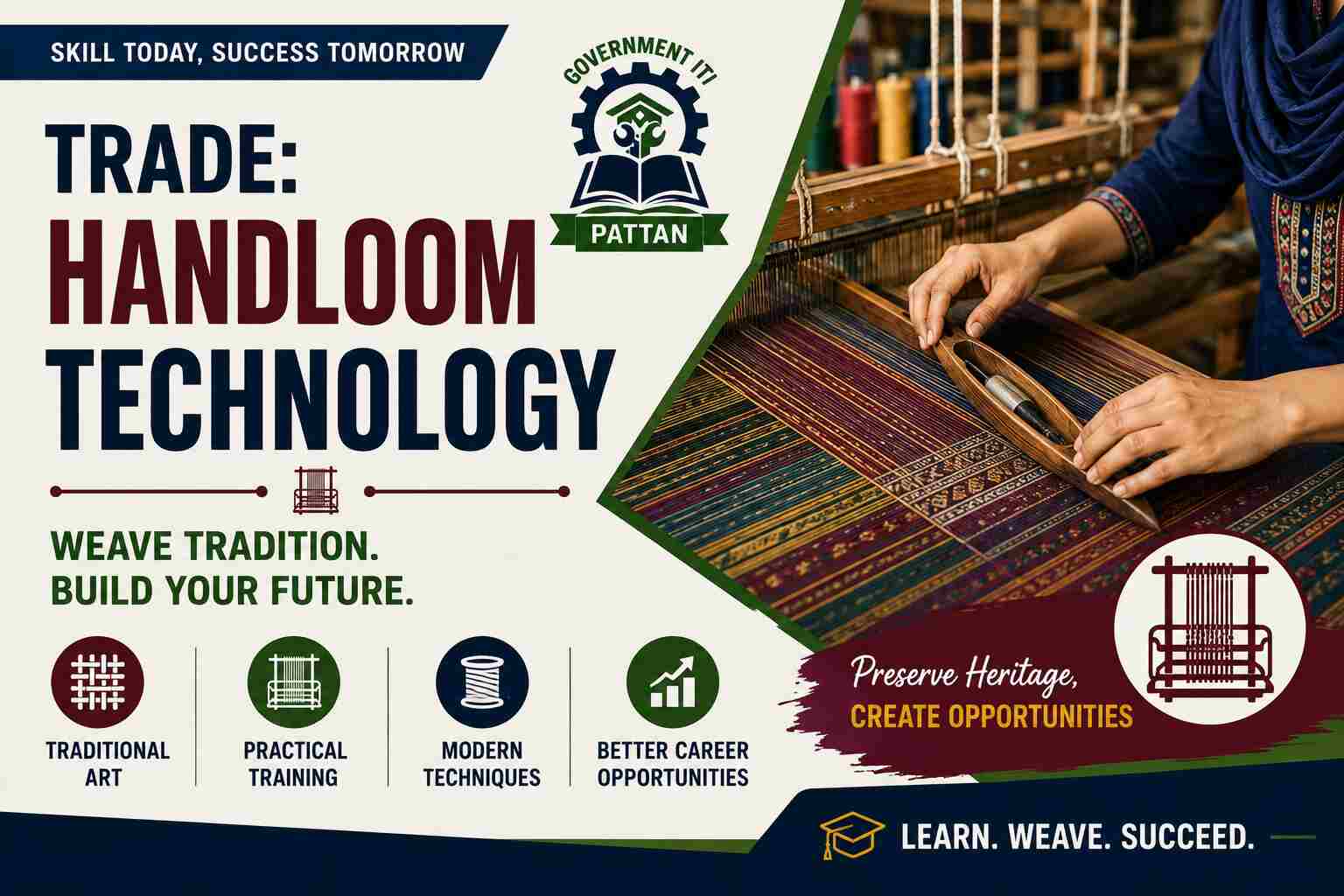
Handloom Technology is SCVT Trade at Industrial Training Institute (ITI) is a skill-oriented vocational programme designed to provide students with practical and technical knowledge of handloom weaving and textile production. The course focuses on developing the skills required to operate handloom equipment, prepare yarn, understand different weaving techniques, and produce quality handloom fabrics.
Handloom Technology is a 1-year SCVT vocational programme focusing on the science of fabric formation, loom mechanics, pattern creation, and traditional weaving of Kashmiri woolens, tweeds, cottons, and silk textiles.
At Government ITI Pattan, the training blends rigorous practical workshop drills with standard theoretical concepts. Trainees undergo safety protocols, equipment handling, blueprint interpretation, and industrial workflow practices ensuring they meet National Occupational Standards (NOS).
8th from a recognized educational board (JKBOSE / CBSE).
Minimum age 14 years as of 1st August of the admission year. No upper age limit for vocational trades.
2-Year engineering trade graduates qualify for direct lateral entry into 2nd year (3rd semester) of Polytechnic Engineering Diploma.
National Trade Certificate (NTC) / State Trade Certificate (STC), recognized for state, central government & private sector jobs.
Graduates of Handloom Technology can pursue diverse career opportunities across industries, government departments, and entrepreneurship.
Handloom Weaver / Supervisor in J&K Handloom Development Corporation
Weaving Master in Textile Mills, Woolen Khadi Units, and Weaving Cooperatives
Textile Fabric Quality Controller
Independent Handloom Unit Entrepreneur supported by Handloom Weaver Mudra loans
Eligible for 1-year paid apprenticeship training under National Apprenticeship Promotion Scheme (NAPS) with government monthly stipend support.
The workshop features fly-shuttle frame looms, traditional pit looms, and dobby attachments for pattern weaving.
Passouts can access the Weaver Mudra Scheme, 10% credit subsidy, margin money assistance, and free distribution of modern work sheds under government handloom schemes.