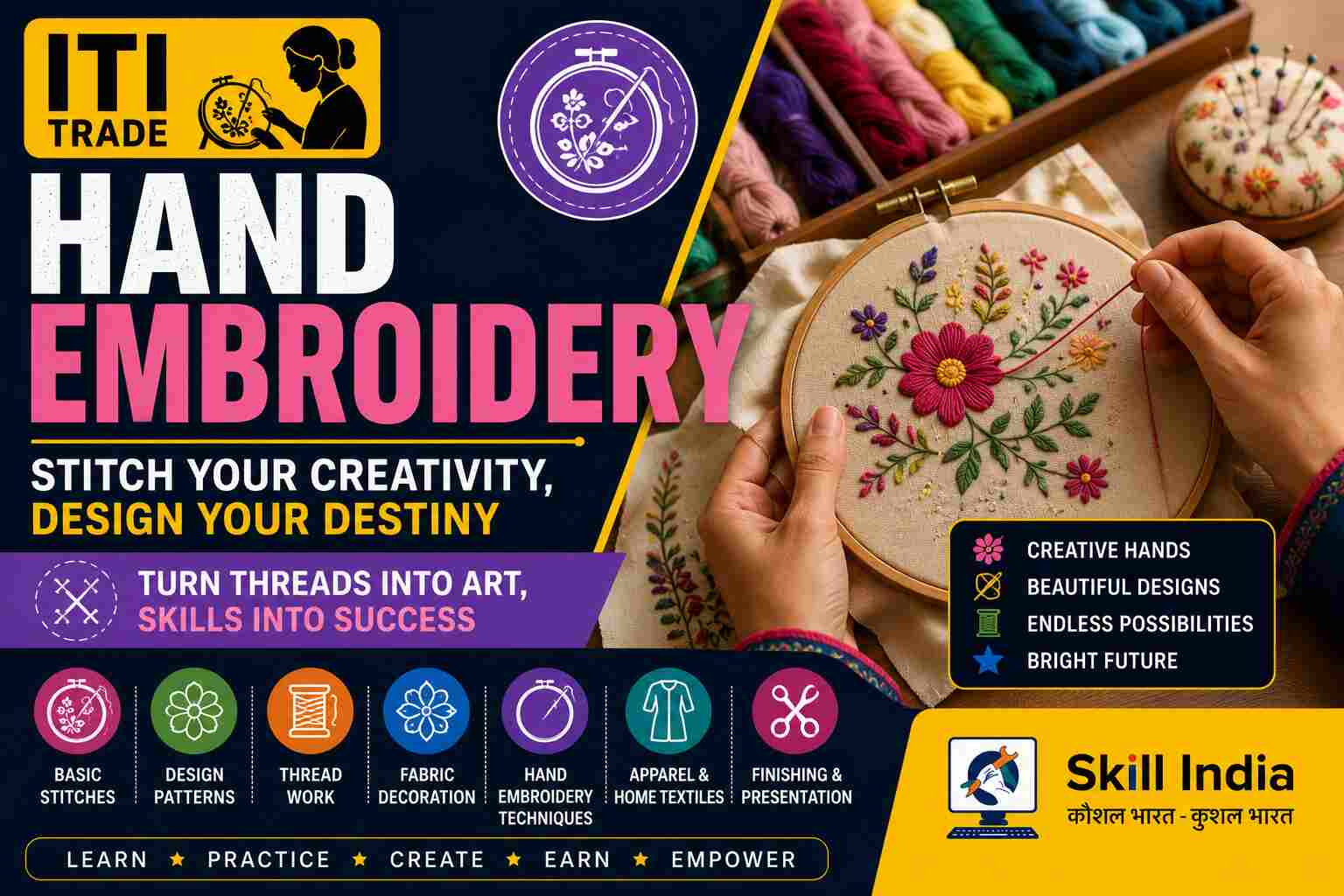
Hand Embroidery is a creative vocational trade offered under the Industrial Training Institute (ITI) that provides students with the skills required to create decorative designs on fabrics using traditional and modern embroidery techniques. The course combines artistic creativity with practical craftsmanship, preparing trainees for careers in the fashion, textile, garment, and handicraft industries.
Hand Embroidery is a 1-year SCVT heritage craft and vocational trade preserving and advancing world-renowned Kashmiri needlecraft traditions, including Crewel/Aari work, Sozni, Tilla, and contemporary ornamental stitching.
At Government ITI Pattan, the training blends rigorous practical workshop drills with standard theoretical concepts. Trainees undergo safety protocols, equipment handling, blueprint interpretation, and industrial workflow practices ensuring they meet National Occupational Standards (NOS).
8th from a recognized educational board (JKBOSE / CBSE).
Minimum age 14 years as of 1st August of the admission year. No upper age limit for vocational trades.
2-Year engineering trade graduates qualify for direct lateral entry into 2nd year (3rd semester) of Polytechnic Engineering Diploma.
National Trade Certificate (NTC) / State Trade Certificate (STC), recognized for state, central government & private sector jobs.
Graduates of Hand Embroidery can pursue diverse career opportunities across industries, government departments, and entrepreneurship.
Master Artisan in the Directorate of Handicrafts & Handloom, J&K
Embroidery Designer for Kashmiri Shawl & Rug Export Houses
Custom Embroidery Studio Owner & Direct-to-Consumer Craftsperson
Artisan Cardholder with access to government artisan financial assistance
Eligible for 1-year paid apprenticeship training under National Apprenticeship Promotion Scheme (NAPS) with government monthly stipend support.
Yes. Trainees completing this SCVT trade can register with the J&K Handicrafts Department to receive Artisan Identity Cards, credit cards with interest subsidies, and exhibition access.
Yes. Both traditional Sozni needlework and metallic Tilla work are key pillars of the practical syllabus.